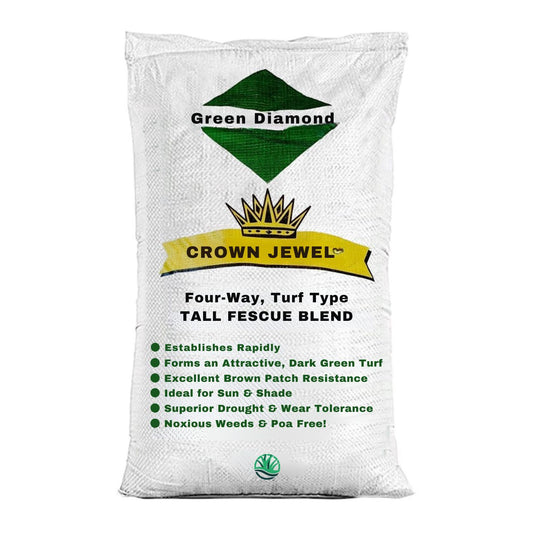
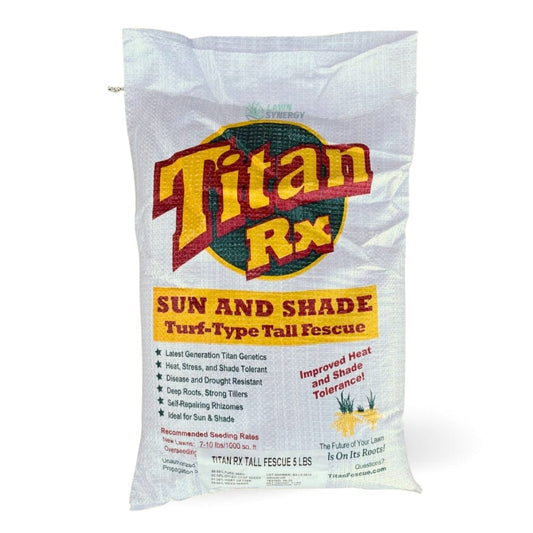
Tall Fescue Grass Seed

Tall Fescue Grass Seed

Looking for the best Tall Fescue Grass Seed for a lush, durable lawn? This collection features premium seed blends designed to deliver exceptional results.

Tall fescue is a cool-season grass known for its dark green color, deep roots, and resilience in various climates. Whether you’re starting a new lawn or overseeding an existing one, tall fescue is a top choice for homeowners and professionals alike.

What Makes High-Quality Tall Fescue Seed?

Not all grass seed is created equal. For a lawn that thrives, look for these key features:

  • 0% Weed Seed: High-quality seed guarantees no weed contamination, so you’re planting only the best.
  • Top Varieties: The finest tall fescue blends include varieties engineered for disease resistance, drought tolerance, and vibrant color.
  • Certified Seed: Ensure your seed meets the highest standards for purity and germination.

When to Plant Tall Fescue Grass Seed

The best time to plant tall fescue seed is in the fall, typically between mid-September and early November. Cooler temperatures and ideal soil conditions during this season promote strong root development, ensuring your lawn is ready to thrive in the spring.

Why Choose Envy Premium Tall Fescue Grass Seed Blend?

Our Envy Premium Tall Fescue Grass Seed Blend is a standout choice for anyone seeking a professional-grade lawn. Here’s why it’s the best option:

  • Deep, rich green color for a show-stopping lawn.
  • A 0% weed seed guarantee, so you only grow the grass you want.
  • Advanced varieties selected for superior performance in transitional climates.
  • Perfect for new lawns, overseeding, or repairing bare spots.
  • For northern climates, North Star Kentucky Bluegrass & Tall Fescue Blend

How to Plant Tall Fescue Grass Seed

To ensure success with tall fescue seed, follow these steps:

  1. Prepare the Soil: Remove debris, test and amend the soil as needed, and loosen the surface.
  2. Seed Evenly: Use a broadcast spreader for uniform coverage.
  3. Water Consistently: Keep the soil moist during germination with light, frequent watering.
  4. Fertilize: Apply a starter fertilizer like 15-20-10 to encourage strong root development.
  5. Mow at the Right Height: Once the grass reaches 3-4 inches, mow to 2.5-3 inches for dense, healthy growth.

Why Tall Fescue is the Perfect Grass Choice

  • Drought Tolerance: Deep roots allow tall fescue to withstand dry spells better than most cool-season grasses.
  • Low Maintenance: It requires less watering and resists many common lawn diseases.
  • High Traffic Durability: Ideal for areas with foot traffic or heavy use.

Upgrade your lawn with premium Tall Fescue Grass Seed from our collection, including our exclusive Envy Premium Tall Fescue Grass Seed Blend. Achieve a dark green, resilient lawn that stands out in your neighborhood.

Frequently Asked Questions

If you have tried a cool-season mix that looked solid in spring but deteriorated fast once summer arrived, the issue was likely the grass type itself, not your maintenance. Tall fescue seed builds a fundamentally different kind of lawn than Kentucky bluegrass or perennial ryegrass. The difference is architectural. Tall fescue is built by its biology for endurance, and understanding that structure explains why it consistently outperforms other cool-season options when conditions get demanding.

Why The Root Depth Of Tall Fescue Changes Everything

Tall fescue develops a root system that can reach 2 to 3 feet deep under good growing conditions. That depth is not a minor advantage over shallower cool-season species. When the top inch of soil dries out during a July heat stretch, a Kentucky bluegrass lawn begins to shut down and go dormant.

A tall fescue lawn keeps pulling moisture from deeper in the soil profile, maintaining color and density while surrounding turf goes brown. For homeowners who do not want to run irrigation every other day just to keep a lawn alive through August, this root architecture is exactly what makes tall fescue worth the investment.  The performance you see above ground is a direct result of what is happening 2 feet below it:

  • Deep roots reduce how often you need to run irrigation during summer heat stress
  • Greater root depth improves drought recovery time after extended dry periods
  • A deep, dense root system resists compaction and foot traffic better than shallow-rooted alternatives

Choosing the right tall fescue lawn seed means matching the variety to your actual conditions rather than picking whatever has an appealing bag. Your climate zone, the amount of shade your property receives, and your long-term lawn goals all affect which variety delivers the best outcome. Getting that match right separates a lawn that fills in evenly and holds up for years from one that germinates acceptably but fades before the second summer.

Understanding Your Climate Zone Before You Buy

Tall fescue is the dominant grass of the transition zone, the stretch of the country from the mid-Atlantic through the Midwest and into parts of the upper South where cool-season grasses burn out in summer, and warm-season grasses cannot survive the winter. If your lawn sits in that climate band, tall fescue is one of the only realistic options for year-round green without aggressive intervention every summer. 

For lawns in cooler northern climates, tall fescue still performs well and carries better heat tolerance than bluegrass or fine fescue when your summers push into the high-temperature range.

Single Varieties Versus Blends

A well-formulated blend of two or three complementary tall fescue varieties typically outperforms a single-variety option in terms of adaptability, disease resistance, and visual uniformity across a full property. Our Envy Premium Tall Fescue Grass Seed Blend is built to deliver consistent color and density across varying light conditions on the same property, which makes it a strong choice for residential lawns where sun exposure shifts across different areas of the yard.

Timing a seeding project correctly is one of the highest-leverage decisions in the entire process. Plant too early in summer and seedlings cook in the heat before their roots can develop. Plant too late in fall and you lose the germination window before the first frost. Getting the timing right allows tall fescue to germinate quickly, push down a strong root system before winter, and come back with the kind of density and coverage in spring that cannot be achieved any other way.

Why Fall Seeding Outperforms Spring For Tall Fescue

The ideal planting window for fescue seed for lawn establishment is late summer into early fall, roughly six to eight weeks before the first average frost date in your area. During this window, soil temperatures are still warm enough to drive fast germination, but air temperatures are beginning to cool, which reduces stress on young seedlings and slows the weed pressure that plagues spring-seeded lawns.

Seedlings spend the entire fall growing roots before they go into dormancy, and that deep root mass is what allows them to come back thick and even the following spring. Most of the high-end estate properties we have managed over our 25+ years of hands-on landscaping experience receive their fall tall fescue overseeding in this exact window every year without exception. To achieve professional-grade results on your own lawn, keep these critical timing factors in mind:

  • Target regional soil temperatures between 50 and 75 degrees Fahrenheit for the fastest germination results.
  • Allow at least six weeks before the first expected frost so seedlings can develop sufficient root depth.
  • Avoid spring planting if possible, as it carries higher weed competition and tends to produce lower establishment rates overall.

We are deliberate about what goes into our collection. Over 25 years of managing 1,000+ estate properties, we have evaluated enough seed to know which varieties deliver real results in the field and which ones underperform once they are actually in the ground. 

The varieties in our Tall Fescue Grass Seed collection are the same ones we use on professional accounts, and they meet a baseline for germination rate, turf quality, color, and seasonal consistency that filters out the commodity seed filling the shelves at big-box retailers.

Envy Tall Fescue Grass Seed is our top performer for transition zone properties. It produces a dense, dark-green turf with strong summer performance and solid adaptability across sun and partial shade.

For properties where the lawn transitions between full-sun and shaded areas, Envy holds its density in the shadier zones rather than thinning out the way lesser varieties tend to do when light levels drop.

For a deeper look at how to compare tall fescue varieties and what separates modern turf-type selections from older, coarser options, our Best Tall Fescue Grass Seed guide walks through the key differences in practical terms. If you are working through a buying decision between multiple options, that guide will help you land on the right choice for your specific conditions and goals.

Seed quality and seedbed preparation have to work together. You can plant the best premium tall fescue seed available and still get a poor result if the soil is not ready for it. Preparation is where most DIY seeding projects fall apart, not because the steps are complicated, but because skipping even one of them shows up as thin coverage, poor germination, or bare patches that require a follow-up seeding within the first year. Every step below addresses a documented failure point.

Soil Testing, Aeration, And Fertility Before You Seed

Start with a soil test. Tall fescue performs best in soil with a pH between 5.5 and 7.0. Most lawns that have never been tested fall somewhere outside that range without the homeowner knowing it, and planting into out-of-range soil limits germination and root development regardless of seed quality. A test removes all the guesswork from your amendment decisions before you put anything in the ground.

Core aeration is the next step, and it matters more than most homeowners expect. Compacted soil blocks the downward root development that makes tall fescue resilient under stress. Running a core aerator across the lawn before seeding breaks up compaction, reduces thatch accumulation, and creates direct seed-to-soil contact that improves germination rates significantly. Leave the soil cores on the surface after you aerate. They break down naturally, improve soil structure as they do, and create a ready-made seedbed for the professional-grade tall fescue seed you apply over them.

Before you apply your starter fertilizer, review our Best Fertilizer for Tall Fescue Grass guide. It covers what to put down at seeding, what to hold back until seedlings are established, and how to manage fertility through the first growing season without pushing new grass harder than its developing roots can support.

Establishment is the hard part, but maintenance is what determines whether the lawn stays dense and healthy long-term or starts thinning out and developing bare patches after a few seasons. Tall fescue is durable, but it responds directly to how it is managed. A few consistent habits make the difference between a lawn that improves year over year and one that starts requiring intervention after two or three growing seasons.

Mowing Height, Watering, And Annual Overseeding For Tall Fescue

Keep tall fescue at 3.5 to 4.5 inches through the summer months. The leaf blade serves a function beyond appearance. It shades the root zone and keeps soil temperatures lower, which helps the grass stay active and resilient when the heat index climbs. Cutting below 3.5 inches removes that insulation and exposes the root zone to the same summer conditions the grass was designed to handle, but without the buffer that height provides. This is one of the most common maintenance mistakes we see on tall fescue lawns that start struggling by late July.

Water deeply and infrequently. The goal is to water the soil 4 to 6 inches deep with each irrigation cycle, then wait until the turf shows early stress signs before running the system again. That pattern trains tall fescue roots to grow downward toward consistent moisture rather than clustering near the surface where they are vulnerable to dry spells. Frequent shallow watering produces shallow roots, and shallow roots are what fail first when conditions get hard.

Tall fescue does not spread by stolons or rhizomes the way Kentucky bluegrass does. It is a bunch-type grass, which means bare spots do not self-repair over time. Annual fall overseeding is part of the standard maintenance calendar for any tall fescue lawn. Seeding the same variety into thin or bare areas each fall keeps the turf dense, maintains consistent color and texture across the property year over year, and closes any gaps before they grow into larger problems that require a full renovation to correct.

Three bags of lawn care products from Lawn Envy, including North Star 20-0-10 fertilizer, displayed on a green grass surface against a dark green background.

Not sure what your lawn needs?

Join our Lawn of the Year Program and take the guesswork out of lawn care. We’ll deliver the right products at the right time, so your lawn gets exactly what it needs all season long.

How It Works

Choose Your Lawn
1

Choose Your Lawn

Tell us your lawn type and goals.

Get Your Program
2

Get Your Program

We recommend the right products and timing.

Apply With Confidence
3

Apply With Confidence

Simple steps for a thicker, greener lawn.

Choose Your Lawn
1
Choose Your Lawn

Tell us your lawn type and goals.

Get Your Program
2
Get Your Program

We recommend the right products and timing.

Apply With Confidence
3
Apply With Confidence

Simple steps for a thicker, greener lawn.

Shop by Category

A white bag of Lawn Synergy Envy Premium Tall Fescue Blend grass seed, featuring green and dark gray branding and product details.

Grass Seed

Clean weed-free seed for an ultra-dark green lawn.

Lawn Fertilizer

Feed your lawn for season-long results.

Weed Control

Clean up pesky weeds that don't belong in your lawn.

Fungicide

Prevent and cure disease in your lawn and ornamentals.

Insecticide

Don't let insects destroy your lawn. Treat ticks mosquitos, and more.

Shop By Lawn Type

Tall Fescue

Bermuda

Zoysia

St. Augustine

Centipede

Northern Lawns

Pro-Grade Products

Pro-Grade Products

Fast Shipping

Fast Shipping

DIY Friendly

DIY Friendly

Expert Support

Expert Support