-
-
-
Regular price From $39.95Regular priceUnit price per
Sale price From $39.95 -
Regular price From $94.99Regular priceUnit price per
Sale price From $94.99 -
Regular price $26.95Regular priceUnit price per
Sale price $26.95 -
SaleRegular price From $56.95Regular priceUnit price per$59.99Sale price From $56.95Sale -
-
2 4 d Weed Killer
Shop professional-grade 2,4-D weed killers for controlling dandelion, clover, plantain and other broadleaf weeds in established lawns. Choose from concentrated liquids, combination herbicides and granular formulas.
Control dandelion, clover, plantain and other troublesome lawn weeds with professional-grade herbicides containing 2,4-D. This collection includes straight 2,4-D concentrates, granular weed killers and multi-ingredient formulas designed for broader weed control in established lawns.
While 2,4-D primarily targets broadleaf weeds, some products in this collection combine it with additional active ingredients to control crabgrass, nutsedge and other difficult grassy or broadleaf weeds. Whether you maintain your own property or treat lawns professionally, choosing the right formula starts with identifying the weed and confirming that the product is labeled for your grass type.
What Is 2,4-D Weed Killer?
2,4-D, short for 2,4-dichlorophenoxyacetic acid, is a selective post-emergent herbicide used to control many broadleaf weeds in established turf. It is available in concentrated liquids, ready-to-use sprays, granular products and combination herbicides.
When used according to the label, 2,4-D controls susceptible broadleaf weeds without harming compatible established lawn grasses. However, every product has its own approved grass types, application rates and temperature restrictions.
How Does 2,4-D Work?
2,4-D is absorbed through the leaves and other actively growing portions of a weed. It moves throughout the plant and disrupts normal growth, causing susceptible weeds to twist, curl, yellow and eventually die.
Results are not always immediate. The time required for control depends on the weed species, weather, application rate and growing conditions. Applications generally perform best when weeds are young, actively growing and not severely stressed by drought, heat or cold.
What Weeds Does 2,4-D Control?
Straight 2,4-D products are primarily used to control broadleaf weeds. Depending on the specific product label, controlled weeds may include:
- Dandelion
- White clover
- Broadleaf and buckhorn plantain
- Chickweed
- Henbit
- Thistle
- Dock
- Oxalis
- Wild onion and wild garlic
- Many other annual and perennial broadleaf weeds
The exact weed list varies by product. Always check the label when purchasing a herbicide to control a specific weed.
Do 2,4-D Products Control Grassy Weeds?
2,4-D by itself primarily controls broadleaf weeds and generally does not control grassy weeds such as crabgrass or goosegrass. However, some products in this collection contain 2,4-D along with other active ingredients that expand the range of weeds controlled.
For example, Q4 Plus combines 2,4-D with quinclorac, sulfentrazone and dicamba. This multi-active formula controls many broadleaf weeds while also targeting crabgrass and yellow nutsedge in labeled turfgrasses.
Do not assume that every product containing 2,4-D controls grassy weeds. Check the active ingredients and the product label to make sure the target weed is listed.
Straight 2,4-D vs. Combination Herbicides
Straight 2,4-D Weed Killers
A straight 2,4-D concentrate is a practical option when the primary problem is susceptible broadleaf weeds. These formulas are often economical for treating larger properties and give experienced applicators control over the mixing rate.
A straight 2,4-D product may be the right choice when:
- The target weed is listed on the 2,4-D product label.
- The lawn does not have crabgrass, nutsedge or other grassy weeds requiring a different active ingredient.
- You need an economical broadleaf weed treatment for a larger area.
- You are equipped to measure, mix and apply a concentrate accurately.
Combination 2,4-D Weed Killers
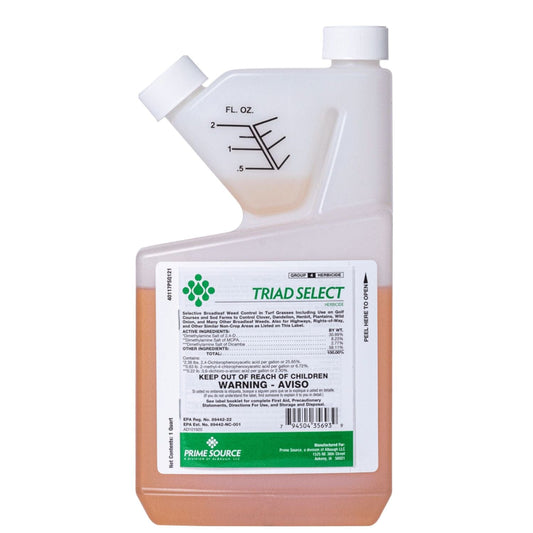
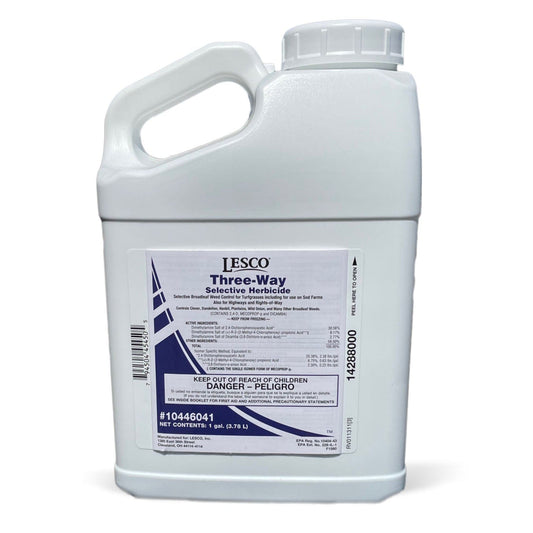
Combination herbicides pair 2,4-D with active ingredients such as dicamba, MCPP, triclopyr, quinclorac, carfentrazone or sulfentrazone. These ingredients can broaden the number of weeds controlled, improve performance on difficult species or provide faster visible results.
A combination product may be a better choice when:
- The lawn contains several different weed species.
- You need broader control than straight 2,4-D provides.
- You are targeting crabgrass, nutsedge or another weed not controlled by 2,4-D alone.
- You want one product that targets both listed broadleaf and grassy weeds.
What Is 2,4-D Amine Weed Killer?
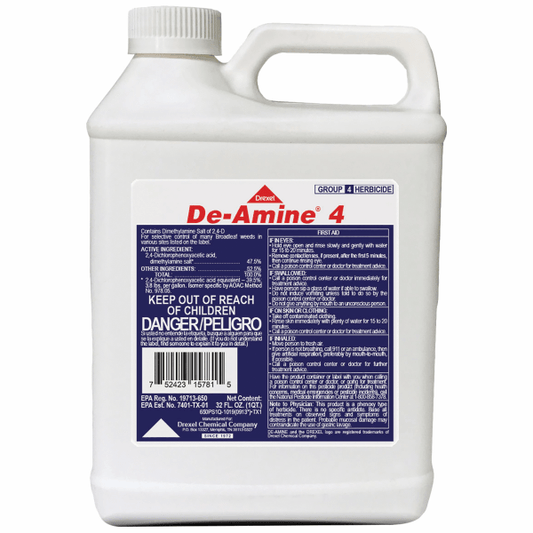
Many concentrated 2,4-D products use an amine salt formulation. A 2,4-D amine weed killer is commonly used for broadleaf weed control in established turf, pastures and other labeled sites.
Amine formulations generally have lower volatility than traditional ester formulations, making them a common choice for lawn applications. Lower volatility does not eliminate the risk of spray drift. Calm weather, accurate mixing and controlled spray placement are still essential.
Liquid vs. Granular 2,4-D Weed Killer
Liquid 2,4-D
Liquid herbicides are a good choice for spot spraying individual weeds or treating larger lawn areas with a calibrated sprayer. They provide direct coverage of the weed foliage and allow precise placement when applied correctly.
Granular 2,4-D
Granular weed killers are applied with a spreader and can be convenient when broadleaf weeds are scattered throughout a lawn. Many granular formulas must stick to damp weed leaves to work properly, so application timing and lawn moisture are important. Follow the product label for mowing, watering and application instructions.
Is 2,4-D Safe for Lawns?
Many 2,4-D products are labeled for use on established cool-season and warm-season turf. Lawn tolerance, however, varies by product, formulation, rate and grass species.
Depending on the label, a product may be approved for grasses such as tall fescue, Kentucky bluegrass, perennial ryegrass, bermudagrass or zoysiagrass. Certain varieties of St. Augustinegrass and centipedegrass may have reduced rates, seasonal restrictions or may not be approved for treatment.
Never assume every 2,4-D weed killer is safe for every lawn. Confirm that your grass species is listed on the label before applying the product.
When Not to Apply
- Do not apply to a grass species that is not listed on the label.
- Avoid treating newly seeded, sodded or sprigged turf unless the label permits it.
- Do not apply to severely drought-stressed, heat-stressed or damaged grass.
- Avoid application during prohibited temperature conditions.
- Do not apply when rain may wash the product away before it becomes rainfast.
- Do not treat when wind could carry spray onto desirable plants.
How to Get Better Weed Control
- Identify the target weed before selecting a product.
- Determine whether it is a broadleaf weed, grassy weed or sedge.
- Confirm that the herbicide is labeled for your grass species.
- Measure the treatment area accurately.
- Mix and apply only the labeled amount.
- Treat weeds while they are young and actively growing.
- Follow all mowing, watering and rainfast instructions.
- Allow the required amount of time between applications.
Making the mixture stronger than the labeled rate will not necessarily produce better results. Overapplication can increase the risk of lawn injury, off-target damage and unnecessary herbicide use.
2,4-D Application Safety
2,4-D products must be measured, mixed and applied according to their labels. The label provides required instructions for personal protective equipment, application rates, reentry, storage and disposal.
- Wear all protective clothing and equipment required by the label.
- Keep people and pets away while mixing and applying the product.
- Follow the label before allowing people or pets back onto treated turf.
- Never spray when wind could carry droplets onto desirable vegetation.
- Use a controlled spray pattern rather than a fine mist.
- Keep applications away from flowers, gardens, shrubs and sensitive trees.
- Avoid open water, storm drains and areas where runoff may occur.
- Do not pour leftover mixture or rinse water into a drain.
- Clean application equipment according to the product label.
Flowers, vegetables, shrubs and many trees are broadleaf plants that can be damaged by small amounts of 2,4-D. Carefully monitor wind direction and leave an appropriate buffer around desirable vegetation.
2 4 d Weed Killer
Frequently Asked Questions
2,4-D alone is not normally the best choice for nutsedge. A combination product such as Q4 Plus contains sulfentrazone and is labeled for yellow nutsedge control in compatible turf. For heavy nutsedge infestations, a dedicated sedge herbicide may provide better control.
2,4-D products require people and pets to remain off the treated lawn until the spray has dried, but requirements vary by formulation. Always read the label.
Seeding restrictions vary between products. Labels may require a waiting period before seeding or a certain number of mowings before newly established grass can be treated. Follow the exact reseeding and new-turf directions on the product being used.
Some weeds may begin curling, twisting or yellowing within several days, but complete control can take longer. Results depend on the weed, product formulation, weather and growing conditions. Difficult perennial weeds may require a second labeled application.
How Long After Spraying 24d Can I Plant Grass Seed?
Achieving a lush, weed-free lawn is a common goal for many DIY enthusiasts. However, timing is crucial, especially when transitioning from weed control to seeding.
Read guide →
When to Weed and Feed Lawns
Maintaining a lush, green lawn involves more than just watering and mowing. If you're wondering when to weed and feed lawns, you've come to the right place.
Read guide →
Does Grass Fertilizer Kill Weeds
If you're pondering the question "does grass fertilizer kill weeds?", you're not alone. At Lawn Synergy, we often encounter this query from lawn enthusiasts who dream of a lush, green lawn free of pesky invaders.
Read guide →
How Do Pre Emergent Herbicides Work?
If you've ever looked across your lawn only to notice pesky weeds popping up everywhere, you've probably wondered how do pre emergent herbicides work?
Read guide →
Can I Apply Pre-Emergent and Post-Emergent at the Same Time?
Can I apply pre-emergent and post-emergent at the same time? It's one of the most common questions we hear from DIY homeowners — and for good reason.
Read guide →
Moss Killer for Lawns
Moss is a symptom of stress, not a “new weed” that suddenly showed up. When conditions stay cool and damp, and the lawn thins out, moss takes the open space and spreads fast.
Read guide →
Germination of Grass Seed
The germination of grass seed is a fascinating and vital process that transforms tiny seeds into a lush, green lawn.
Read guide →
Not sure what your lawn needs?
How It Works
Choose Your Lawn
Tell us your lawn type and goals.
Get Your Program
We recommend the right products and timing.
Apply With Confidence
Simple steps for a thicker, greener lawn.
Tell us your lawn type and goals.
We recommend the right products and timing.
Simple steps for a thicker, greener lawn.
Shop by Category
Pro-Grade Products
Fast Shipping
DIY Friendly
Expert Support